Aged care fees explained
30/04/2026

Aged care fees in Australia include:
· Accommodation payment (RAD): Average was $595,750 in February.
· Basic Daily Fee of $65.55 per day
· Means-tested Hotelling Contribution of up to $22.15 per day
· Non-Clinical Care Contribution of up to $105.30 per day
The Government’s Minister for Aged Care and Seniors, Sam Rae, states Labor’s once-in-a-generation aged care reforms are continuing to improve the lives of older Australians.
Showers, dressings and continence pads will become part of clinical care (paid for by the government) from 1 October.
The cost of aged care is also simply four separate charges, with a fifth optional.
From 1 November 2025, anyone who is deemed eligible for residential aged care has to pay an:
· Accommodation payment
· Basic Daily Fee,
· Hotelling Contribution, and
· Non-Clinical Care Contribution.
The accommodation payment can be paid as a lump sum (a Refundable Accommodation Deposit or RAD), a daily payment (DAP), or a blend of both. Mirus said in February 2026, the average RAD was $595,750. The aged care operator is entitled to retain 2% of the RAD, capped at 5 years.
Second is the basic daily fee, which everyone pays. As of 20 March 2026, the maximum basic daily fee for residential aged care in Australia is $66.80 per day. It is set by the Australian Government.
The Hotelling Contribution covers part of the cost of daily living services such as meals, cleaning and laundry. The amount you or a loved one pays is determined by their means assessment and is outlined in your fee advice letter from Services Australia.
The Non-Clinical Care Contribution covers some costs for personal care such as assistance with bathing, mobility and lifestyle activities. The amount paid is determined by your means assessment and is outlined in your fee advice letter from Services Australia.
Higher Everyday Living Fee (HELF)
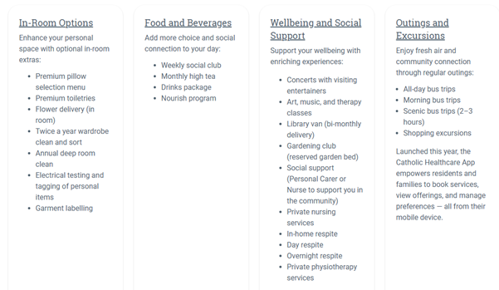
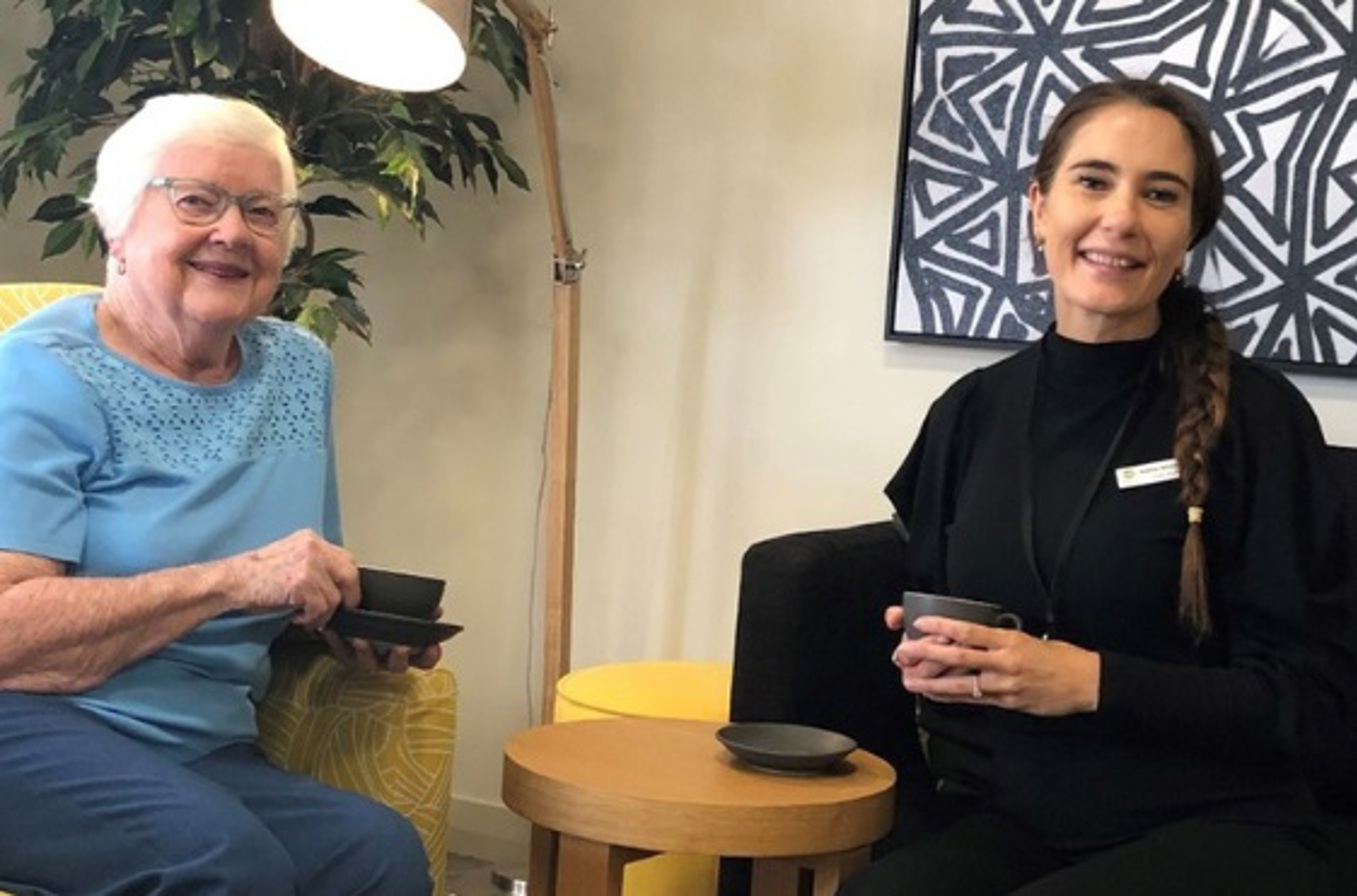
Photo: Catholic Healthcare
A beloved entering residential aged care can opt to pay, once they have entered a facility, a Higher Everyday Living Fee.
The Higher Everyday Living Fee (HELF) is an optional fee for people who choose to receive a higher standard of everyday living services in residential aged care. Providers must demonstrate that the services offered as part of the HELF are not those they are already obligated to provide.
Examples of what HELF can include:
· Premium dining
· Lifestyle extras
· Wellness programs
Examples of what HELF cannot include:
· Standard care
· Maintenance
· Accommodation