How to lower your risk of eight major diseases

01/04/2026

Just a few minutes of vigorous physical activity each day may significantly lower the chances of developing several major diseases, including arthritis, heart disease, and dementia, according to research published on 30 March in the European Heart Journal.

To explore this connection, researchers analysed data from nearly 96,000 people. They compared overall physical activity levels with how much of that activity was vigorous, then tracked participants' risk of developing eight major diseases over time.

Even brief moments of higher intensity effort, such as running to catch a bus, were associated with lower risks of both disease and death. The protective effects were especially strong for inflammatory conditions like arthritis, serious cardiovascular problems such as heart attack and stroke, and dementia.

Large Study Tracks Activity and Health Outcomes

The study was led by an international team that included Professor Minxue Shen from the Xiangya School of Public Health at Central South University in Hunan, China.

He said: "We know that physical activity reduces the risk of chronic disease and premature death, and there is growing evidence that vigorous activity provides greater health benefits per minute than moderate activity. But questions remain about the importance of intense activity versus total physical activity. For example, if two people do the same total amount of activity, does the person who exercises more vigorously gain greater health benefits? And if someone has limited time, should they focus on exercising harder rather than longer?"

Participants, all part of the UK Biobank study, wore wrist-based accelerometers for one week. These devices captured detailed movement patterns, including short bursts of vigorous activity that people might not remember or report. Researchers used this data to calculate both total activity and then share that it was intense enough to cause breathlessness.

The team then compared these measurements with participants' likelihood of dying or developing eight serious conditions over the next seven years (major cardiovascular disease, irregular heartbeat, type 2 diabetes, immune-mediated inflammatory diseases, liver disease, chronic respiratory diseases, chronic kidney disease and dementia).

Higher Intensity Activity Shows Stronger Benefits
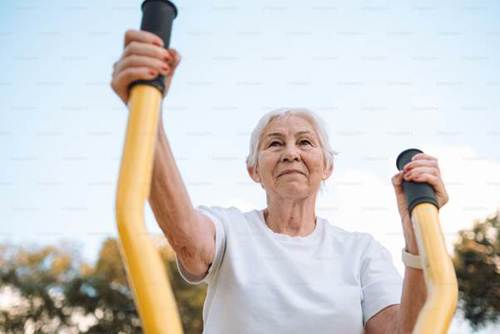
The results showed that people who devoted a larger portion of their activity to vigorous movement had much lower risks across all conditions studied. Compared with those who did no vigorous activity, individuals with the highest levels saw a 63% lower risk of dementia, a 60% lower risk of type 2 diabetes, and a 46% lower risk of death. These benefits were observed even when the total time spent on vigorous activity was relatively small.

The researchers also found that intensity played a larger role for certain diseases. For inflammatory conditions such as arthritis and psoriasis, intensity appeared to be the key factor in lowering risk. In contrast, for diseases like diabetes and chronic liver disease, both how long people were active and how hard they exercised were important.

Why Vigorous Activity Has Unique Effects

Professor Shen said: "Vigorous physical activity appears to trigger specific responses in the body that lower-intensity activity cannot fully replicate. During vigorous physical activity -- the kind that makes you feel out of breath -- your body responds in powerful ways. Your heart pumps more efficiently, your blood vessels become more flexible, and your body improves its ability to use oxygen.

"Vigorous activity also appears to reduce inflammation. This may help explain why we saw strong associations with inflammatory conditions such as psoriasis and arthritis. It may also stimulate chemicals in the brain that help keep brain cells healthy, which could help explain the lower risk of dementia."

Small Changes in Daily Life Can Make a Difference

"Our findings suggest that making some of your physical activity vigorous can provide substantial health benefits. This doesn't require going to the gym. Adding short bursts of activity that make you slightly breathless into daily life, like taking the stairs quickly, walking fast between errands or playing actively with children, can make a real difference. Even 15 to 20 minutes per week of this kind of effort -- just a few minutes a day -- was linked to meaningful health benefits.

"Current guidelines generally focus on the amount of time spent being active per week. Our findings suggest that the composition of that activity matters, and matters differently depending on which diseases you're trying to prevent. This could open the door to more personalized physical activity recommendations based on an individual's specific health risks.

"Vigorous activity may not be safe for everyone, especially older adults or people with certain medical conditions. For them, any increase in movement is still beneficial, and activity should be tailored to the individual."

Return to Newsletter


Popular Articles

View All Articles
Article Img

01/01/0001

What makes a great retirement village manager?

As anyone who lives in a retirement village will tell you, the village manager is a central figure who is critical to the success of the village and the happiness and wellbeing of village residents. But there’s no doubt the village manager plays an essential role. So, what is the role of a retirement village manager?

Article Img

01/01/0001

Retirement villages without exit fees? They’re happening!

Retirement villages without exit fees? They’re happening! Now, some of Australia’s largest retirement village operators are looking at new ways to pay for retirement villages that don’t include exit fees – indeed, there are calls for some exit fees to be banned.

Article Img

01/01/0001

What sort of profits do retirement village owners make?

The number of Australians over the age of 75 is expected to increase by 70% over the next six years. The number of Australians over the age of 80 is expected to triple to more than 3.5 million over the next 40 years. As the number of older people in Australia surges, so too does demand for age-appropriate housing – such as retirement villages, which offer an affordable lifestyle, community, and ongoing health and wellness support.

Article Img

01/01/0001

73% of Australians willing to sacrifice inheritance for aged care

Nearly three-quarters of all Australians are willing to sacrifice their own inheritance so their parents and grandparents can enjoy the retirement they deserve, according to a new report by B2B aged care service CompliSpace.

Article Img

01/01/0001

Volunteers are the backbone of the aged care sector, and more are needed

Tens of thousands of people, of all ages, such as 90-year-old Lily Burns and 20-year-old Charlise Hannagan, volunteer in aged care homes. The Change Makers is the theme for this year’s National Volunteer Week, 15 to 21st May, which celebrates the vital work of volunteers.

Article Img

01/01/0001

What is the Future of Rental Retirement Villages?

Across Australia there are approximately 300 rental retirement villages – but few more are likely to be built, which is an unfortunate situation for older Australians. Rental retirement villages operate much like normal rentals, but they offer older Australian with limited financial means the opportunity of housing security, health and lifestyle support, and a welcoming and safe community.

Article Img

01/01/0001

This is the food that you can get in residential aged care

Uniting NSW.ACT is aware of the criticism that is often levelled at the food served in residential aged care homes. The Not For Profit is passionate about the food served to residents and determined that as well meeting residents’ nutrition needs, their food looks and tastes delicious and as well as catering to their individual desires as much as possible.

Article Img

01/01/0001

Unique test can predict if you have dementia up to nine years earlier

An international research team led by Queen Mary University of London, UK, has developed a new method for predicting dementia with an over 80 per cent accuracy and up to nine years before diagnosis. The new method provides a more accurate way to predict dementia than memory tests or measurements of brain shrinkage, two commonly used methods for diagnosing dementia.

A special thanks to our contributors

Icons

Caroline Egan

DCM Media, agedcare101

Caroline has a wealth of experience writing within the retirement and aged care sector and is a contributing journalist for the Villages.com.au and agedcare101 blog and accompanying newsletters.

Icons

Ian Horswill

Journalist

Ian is a journalist, writer and sub-editor for the aged care sector, working at The DCM Group. He writes for The Weekly Source, agedcare101, villages.com.au and the DCM Institute fortnightly newsletter Friday. Ian is in daily contact with CEOs of retirement living, land lease and the aged care operations and makes a new contact every week. He investigates media releases, LinkedIn and Facebook for a good source for ideas for stories.

Icons

Lauren Broomham

Retirement and Aged Care Journalist

Lauren is a journalist for villages.com.au, agedcare101 and The Donaldson Sisters. Growing up in a big family in small town communities, she has always had a love for the written word, joining her local library at the age of six months. With over eight years' experience in writing and editing, she is a keen follower of news and current affairs with a nose for a good story.

Icons

Jill Donaldson

Physiotherapist

Jill has been practicing as a clinical physiotherapist for 30 years. For the last 13 years she has worked solely in the Aged Care sector in more than 50 metropolitan and regional facilities. Jill has also toured care facilities in the US and Africa and is a passionate advocate for both the residents in aged care and the staff who care for them. She researches and writes for DCM Media.

Icons

Chris Baynes

DCM Media, agedcare101

Chris has been a journalist and publisher in the retirement village and aged care sectors for 11 years. He has visited over 250 retirement villages and 50 aged care facilities both within Australia and internationally. Chris is a regular speaker at industry conferences plus is a frequent radio commentator.

Icons

Annie Donaldson

Nurse and Carer

Annie has a long career in both nursing and the media. She has planned and co-ordinated the medical support from both international TV productions and major stadium events. In recent years she has been a primary family carer plus involved in structured carer support.