The aged care operator with 21 empathetic companion robots

30/04/2026

Loneliness among the elderly has been highlighted by DCM Group CEO Chris Baynes, Catholic Healthcare CEO Josh McFarland and this month, Monash University in Melbourne.

The innovative operator mecwacare, which provides a plethora of services, has introduced its 22nd Andromeda into its residential aged care homes.

mecwacare says it is the largest rollout of empathetic humanoid companion robots in Australian aged care, with more than 1500 residents now sharing their days with one.

Abi is four-foot tall, brightly coloured, speaks up to 90 languages, occasionally blows bubbles and remembers details such as the songs residents grew up with.
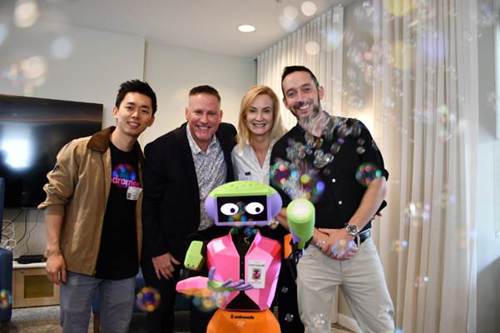
From left: Andromeda Co-founder and CTO Yan Chen, mecwacare General Manager IT Transformation Kendall Kilbride, mecwacare CEO Anne McCormack and Andromeda CCO Brian McCarthy.

mecwacare CEO Anne McCormack describes the impact Abi is already having on residents as profound.

“Our residents see Abi as part of the circle of care and our staff refer to Abi as our Happiness Assistant. She’s lifting moods, reducing physical, social and linguistic isolation, encouraging connection and helping people express themselves in ways that feel natural and comfortable. For families, seeing their loved ones laughing and engaging is incredibly powerful.”

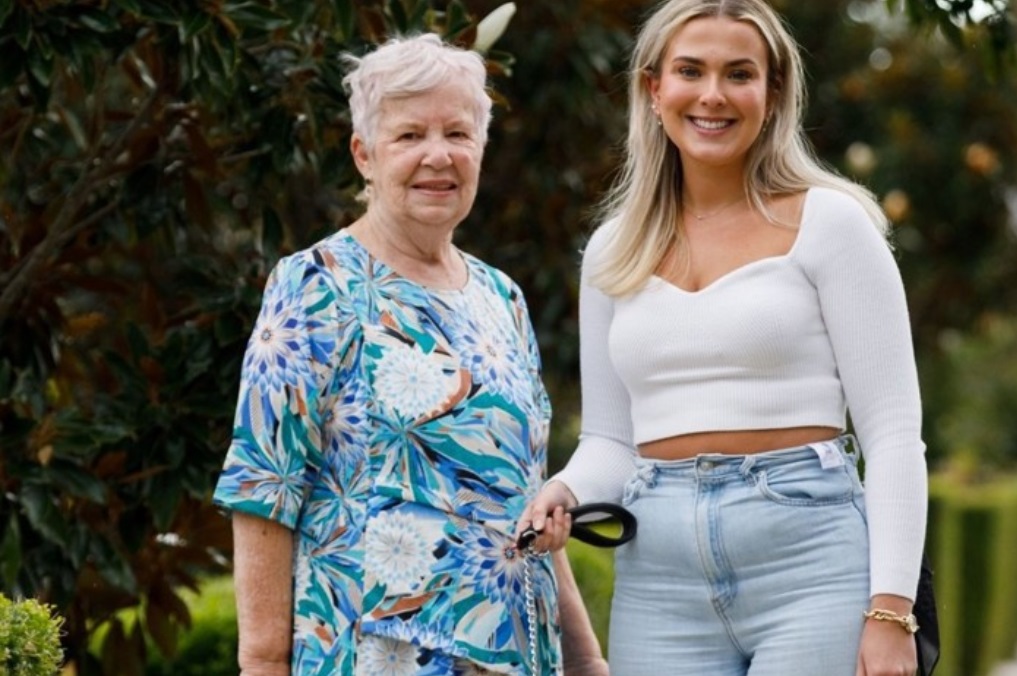
Grace Brown built the first of these machines, called Abi, in her bedroom during a Melbourne COVID-19 lockdown because she felt lonely.

Five years on, the 26-year-old mechatronics engineer is Chief Executive of Andromeda Robotics, a Melbourne-headquartered company valued at roughly $100 million with offices in San Francisco and convinced that the robot she started as a hobby will become something far larger than aged care.

“The hardest part is not what people expect,” Grace told Nine Entertainment. “It’s not the engineering. It’s not the fundraising. It’s the fact that we are effectively writing the rule book for how a robot should behave around someone who is lonely, grieving, confused, or dying – in real time, in real homes, with real families watching. There is no textbook for that.”

Australia faces a projected shortfall of at least 110,000 aged-care workers by 2030, according to the Committee for Economic Development of Australia. In Grace’s own research, 40 per cent of Australian residents do not get a single visitor in a given month; in the US, it’s 60 per cent.

“Loneliness at the end of life isn’t the absence of people,” she says. “Most residents are surrounded by people. It’s the absence of someone who knows you. Who remembers the name of your first dog. Who notices you’ve gone quiet today in a way you weren’t yesterday.”

Return to Newsletter

Popular Articles

View All Articles
Article Img

01/01/0001

What makes a great retirement village manager?

As anyone who lives in a retirement village will tell you, the village manager is a central figure who is critical to the success of the village and the happiness and wellbeing of village residents. But there’s no doubt the village manager plays an essential role. So, what is the role of a retirement village manager?

Article Img

01/01/0001

Retirement villages without exit fees? They’re happening!

Retirement villages without exit fees? They’re happening! Now, some of Australia’s largest retirement village operators are looking at new ways to pay for retirement villages that don’t include exit fees – indeed, there are calls for some exit fees to be banned.

Article Img

01/01/0001

What sort of profits do retirement village owners make?

The number of Australians over the age of 75 is expected to increase by 70% over the next six years. The number of Australians over the age of 80 is expected to triple to more than 3.5 million over the next 40 years. As the number of older people in Australia surges, so too does demand for age-appropriate housing – such as retirement villages, which offer an affordable lifestyle, community, and ongoing health and wellness support.

Article Img

01/01/0001

73% of Australians willing to sacrifice inheritance for aged care

Nearly three-quarters of all Australians are willing to sacrifice their own inheritance so their parents and grandparents can enjoy the retirement they deserve, according to a new report by B2B aged care service CompliSpace.

Article Img

01/01/0001

Volunteers are the backbone of the aged care sector, and more are needed

Tens of thousands of people, of all ages, such as 90-year-old Lily Burns and 20-year-old Charlise Hannagan, volunteer in aged care homes. The Change Makers is the theme for this year’s National Volunteer Week, 15 to 21st May, which celebrates the vital work of volunteers.

Article Img

01/01/0001

What is the Future of Rental Retirement Villages?

Across Australia there are approximately 300 rental retirement villages – but few more are likely to be built, which is an unfortunate situation for older Australians. Rental retirement villages operate much like normal rentals, but they offer older Australian with limited financial means the opportunity of housing security, health and lifestyle support, and a welcoming and safe community.

Article Img

01/01/0001

This is the food that you can get in residential aged care

Uniting NSW.ACT is aware of the criticism that is often levelled at the food served in residential aged care homes. The Not For Profit is passionate about the food served to residents and determined that as well meeting residents’ nutrition needs, their food looks and tastes delicious and as well as catering to their individual desires as much as possible.

Article Img

01/01/0001

Unique test can predict if you have dementia up to nine years earlier

An international research team led by Queen Mary University of London, UK, has developed a new method for predicting dementia with an over 80 per cent accuracy and up to nine years before diagnosis. The new method provides a more accurate way to predict dementia than memory tests or measurements of brain shrinkage, two commonly used methods for diagnosing dementia.

A special thanks to our contributors

Icons

Caroline Egan

DCM Media, agedcare101

Caroline has a wealth of experience writing within the retirement and aged care sector and is a contributing journalist for the Villages.com.au and agedcare101 blog and accompanying newsletters.

Icons

Ian Horswill

Journalist

Ian is a journalist, writer and sub-editor for the aged care sector, working at The DCM Group. He writes for The Weekly Source, agedcare101, villages.com.au and the DCM Institute fortnightly newsletter Friday. Ian is in daily contact with CEOs of retirement living, land lease and the aged care operations and makes a new contact every week. He investigates media releases, LinkedIn and Facebook for a good source for ideas for stories.

Icons

Lauren Broomham

Retirement and Aged Care Journalist

Lauren is a journalist for villages.com.au, agedcare101 and The Donaldson Sisters. Growing up in a big family in small town communities, she has always had a love for the written word, joining her local library at the age of six months. With over eight years' experience in writing and editing, she is a keen follower of news and current affairs with a nose for a good story.

Icons

Jill Donaldson

Physiotherapist

Jill has been practicing as a clinical physiotherapist for 30 years. For the last 13 years she has worked solely in the Aged Care sector in more than 50 metropolitan and regional facilities. Jill has also toured care facilities in the US and Africa and is a passionate advocate for both the residents in aged care and the staff who care for them. She researches and writes for DCM Media.

Icons

Chris Baynes

DCM Media, agedcare101

Chris has been a journalist and publisher in the retirement village and aged care sectors for 11 years. He has visited over 250 retirement villages and 50 aged care facilities both within Australia and internationally. Chris is a regular speaker at industry conferences plus is a frequent radio commentator.

Icons

Annie Donaldson

Nurse and Carer

Annie has a long career in both nursing and the media. She has planned and co-ordinated the medical support from both international TV productions and major stadium events. In recent years she has been a primary family carer plus involved in structured carer support.